






































































































Movember is about much more than growing a moustache. It’s an opportunity to get men talking about their health, from preventive check-ups and prostate health to the pressures that can make it difficult to ask for help.
This November, let’s encourage the men in our lives to take their health seriously, recognise when something needs attention and feel supported in taking the next step.
1. Don’t Put Off the Check-Up: Stay Up to Date on Prostate and Testicular Health
Many health concerns are easier to address when they are identified early, but putting off appointments can mean missing opportunities to discuss risks and symptoms with a healthcare professional.
Prostate health deserves particular attention as men get older. Men should speak with their healthcare provider about whether prostate cancer screening is appropriate for them, considering factors such as age, family history and individual risk. Screening is a decision to make with a healthcare professional after discussing its potential benefits, limitations and risks.
It is also important to know what is normal for your body. Changes in the testicles, including a lump, swelling, persistent discomfort or a change in size, should be checked by a healthcare professional. These changes do not automatically mean cancer, but they should not be ignored.
Make it a priority:
- Book appointments when due
- Raise concerns promptly
- Ask your healthcare provider which checks are appropriate for your age and health history.

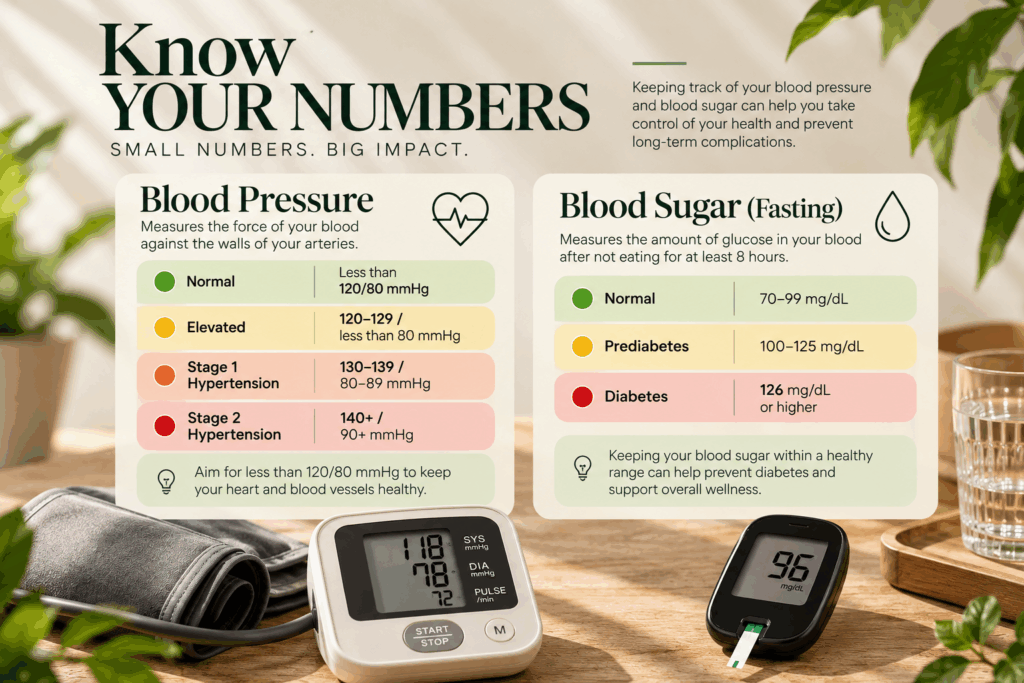
2. Know Your Numbers: Blood Pressure, Blood Sugar and Cholesterol
Prostate health is only one part of the picture. Heart disease, high blood pressure and diabetes are also important considerations when it comes to men’s long-term wellbeing.
High blood pressure and elevated blood sugar may not cause obvious symptoms, which makes appropriate screening and monitoring important. Regular check-ups can help identify concerns and give you an opportunity to discuss your results, risk factors and next steps with a healthcare provider.
Knowing your numbers also gives you a clearer starting point for making decisions about your health. If your results are outside the recommended range, your healthcare provider can help you understand what they mean and whether lifestyle changes, treatment or further testing may be needed.
Make it a priority:
- Ask about blood pressure, blood glucose and cholesterol checks, particularly if you have risk factors or a family history of related conditions.
3. Make Space for Conversations About Men’s Mental Health
Men’s health is not only physical. Stress, anxiety, depression, loneliness and other emotional challenges can affect anyone, yet some men may feel pressure to keep their struggles to themselves.
Messages about always being strong, handling problems alone or not showing vulnerability can make asking for help feel uncomfortable. Over time, this can make it harder to acknowledge when something is wrong.
Checking in with a friend, partner, relative or colleague can create an opportunity for an honest conversation. Ask how they are doing, listen without judgement and avoid dismissing their concerns or rushing to offer solutions.
If someone is struggling, encourage them to speak with a qualified healthcare or mental health professional. Support may also involve helping them identify someone they trust or taking the first step towards accessing care.
Make it a priority:
- Treat mental wellbeing as part of overall health.
- Asking for support is a responsible step, not a failure to cope.

4. Talk About Family Health Risks
Family health history can provide useful information about a man’s risk of developing certain conditions.
For example, having a close relative who has had prostate cancer can influence when a man should discuss screening with his healthcare provider. A family history of diabetes, high blood pressure or heart disease may also be relevant when assessing his health risks.
These conversations do not have to be formal or uncomfortable. Ask relatives about significant health conditions in the family and share relevant details with your healthcare provider.
Family history does not guarantee that you will develop a particular condition. It simply provides another piece of information that can help guide decisions about preventive care.
Make it a priority:
- Talk openly about significant family health conditions
- Make sure your healthcare provider knows about any relevant history.

5. Make Asking for Help a Sign of Strength
Taking responsibility for your health does not mean doing everything alone. Partners, relatives, friends and healthcare professionals can all play a role in helping men access information, attend appointments and feel supported when facing health concerns.
Sometimes, support is practical: reminding someone about a check-up, offering to help arrange an appointment or asking whether they have followed up on a concern. At other times, it means listening without judgement and allowing someone to speak honestly about what they are experiencing.
It is equally important to respect a person’s privacy and decisions. The goal is not to pressure someone, but to make seeking information and care feel more manageable.
And for men who have been putting their own health last, remember that looking after yourself is part of being there for the people who matter to you.
Make it a priority:
- Check in on the men in your life
- Encourage them to seek professional advice when needed
- Let them know they do not have to navigate every concern alone.

Make Men’s Health a Year-Round Priority
Movember gives us a reason to start the conversation, but men’s health deserves attention throughout the year.
From keeping up with appropriate health checks to talking openly about mental wellbeing, knowing your family health history and seeking help when something feels wrong, small actions can make a meaningful difference.
You don’t need to wait for a campaign to check in with someone you care about, and you don’t need to wait until a concern becomes difficult to ignore before seeking advice.
This November, show up for men’s health. Start the conversation, encourage the check-up and remind the men in your life that their wellbeing matters.
Nourish Your Wellness with Organica